
May I open by expressing my gratitude to Mr. John Coxon for his interesting piece, writes Roger Baker.
I think it is important to have some empathy with CaRT in so far as there are increasingly problems with certain categories of people choosing to live on boats, however their enforcement policy does not appear in any way to be targeting the worst offenders. There are those who become waylaid on their travels through unforeseen breakdowns, stoppages, mishaps and health reasons. CaRT are it seems delighted in taking to task this 'low hanging fruit' as the uncomfortable prospect of going after the real problematic individuals looks expensive and complicated, quite possibly dangerous too.
 Not paying for anything
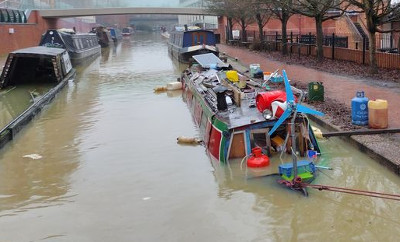
I have long pondered on the overall number of boats they do not hold records for on the network. There is an increasing number of floating Pig Sty’s upon which there is no name, number or licence. The canals have attracted those who take great pride in not paying for anything, and against whom enforcement seems unlikely. Boats can be bought cheaply enough in the market place, easily and routinely changing hands with no paper trail as opposed to those sold through brokerages.
We cruisers know all too well of the problematic nature of finding a convenient place to moor for a brief stopover. In many cases (even in winter when the only available spaces are taken by those who have no intention of moving at least until spring) popular visitor moorings are strewn with junk along the bank, snarling dogs and slag heaps of stove ash. The outward appearance of such boats that I am really talking about here, appear suggestive of not containing pleasant and affable fellow travelling boaters.
All too often the air is full of the smell of burning Cannabis, and after a brief risk assessment we are forced to keep on moving. I hate to sound like a snob, but I have become increasingly risk averse in my old age, (as well as finding it difficult to keep my trap shut) and suspect a lot more of us are also.
 Those associations complaining about the 'way of life' on the canal being under threat have plainly lost sight of the most important fact of all—it being a transport network—end of story. The only de facto way of life just about expired at the end of the carrying days. I strongly suggest the largest group of problem 'Free-loading' boaters cluttering our banks needs to be dealt with by those associations that claim heritage, as they give us paid-up and legitimate travellers a bad name. I doubt there are many in this particular demographic who have ever heard of the NBTA or RBOA let alone could pronounce either. As the NBTA see the canal as their house, it’s about time they organised and got it in order rather than bleating on about ethnic cleansing of some ancient and traditional nomadic tribe of victims…
Ineffective enforcement
If rules are to be made, they have no value whatsoever if enforcement Is or appears to be ineffective, and most of all, if we as fare paying boaters are to find an 'emotional and spiritual' way to support CaRT in their role and believe in them, it is down to them to make it at the very least appear even handed and above all 'Fair'. Give us at least the chance to believe they’re on our side. There’s not a lot to have 'faith' in nowadays so here’s an opportunity. They need to bring us on-board more convincingly and sympathetically, and dispel the fear that the canal is becoming uncontrollably filled with 'Fare Dodgers and Fugitives' who are anonymous and untouchable in this now apparently linear dosshouse.
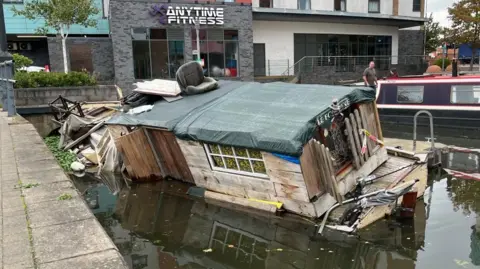
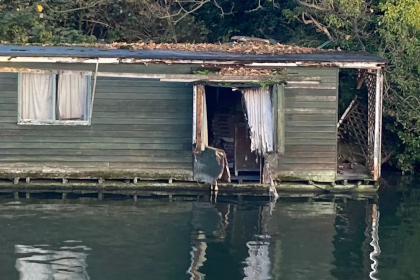 Apart from some often belated running repairs to the infrastructure, CaRT provide us with no confidence that the other important issues are likely to ever be addressed. The canals are slowly but steadily accumulating sunken 'dead men’s boats' and abandoned GRP cruiser skips full of detritus. Given the age and neglected appearance of a great many elderly leisure craft of all types still afloat, this is only on course to worsen in the coming years as these hulks settle onto the bottom creating environmental damage and hazards that are likely to impact our freedom to travel.
I reside in Willington but my berth is elsewhere. I could cite examples of several boats that have not left the convenience of Willington visitor moorings at least since July—(not now moored on the winter moorings section I might add). If as just an example, they are there with some form of consent from CaRT then it should be made obvious by signage, as otherwise it simply appears they’re getting away with it and it encourages others to do the same wherever they choose to settle down and arrange schools for children, Poste-restante with the local post office and regular supermarket deliveries.
CaRT have a mountain to climb to convince us it will look better in the future, or at least before the time many of us fold and leave in dismay.
Roger Baker, Willington.