
The Whitchurch embankment failure by Ralph Freeman
An engineering analysis of modern framework. Civils vs. pioneer heritage systems
Executive summary
The ongoing difficulties experienced by the Canal & River Trust (CRT) and its primary framework contractors (Kier) at the Whitchurch Embankment stem from a fundamental methodology gap: treating a dynamic, 19th-century hydraulic soil-structure interaction model with rigid 21st century civil engineering interventions.
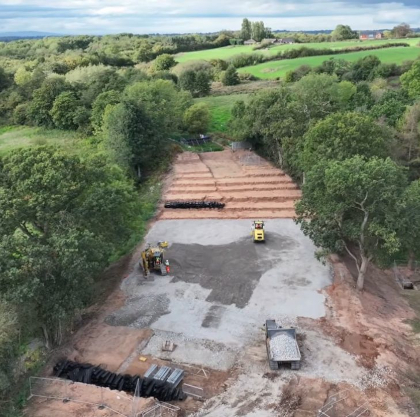 Rather than working from the starting point of reverse-engineering the original design logic, corporate framework management often dismisses historic features as primitive or accidental. This institutional arrogance—unsubstantiated by any track record of building 200-year infrastructure—has led to interventions that actively conflict with the underlying physics of the original asset.
1. Respecting the master builder: Newtonian mechanics and structural margin
A persistent error in modern asset evaluations is the assumption that 19th-century pioneers like Thomas Telford, William Jessop, and John Rennie relied on crude guesswork. By the turn of the 19th century, civil engineering was firmly anchored in Newtonian mechanics, vector statics, calculus, and hydrostatic theory.
These engineers designed masonry arches, aqueducts, and retaining structures with deliberate geometric stability. They ensured the resultant lines of thrust stayed strictly within the middle third of masonry sections to prevent tension failure, and they incorporated generous factors of safety (frequently 3 to 5+) to accommodate unquantifiable loads and variable soil mechanics.
When modern framework engineers analyse these assets through simplified structural modelling software or standardised Eurocodes, they frequently misinterpret flexible, self-supporting geometry as 'unstable' or 'failing', simply because it does not fit modern byrigid material assumptions.
2. Reverse engineering the asset: The Whitchurch Culvert clay buffers
In complex engineering systems, an unusual feature is rarely a mistake; it is usually a calculated response to an unseen constraint. A prime example is the presence of puddled clay intentionally placed directly over the crown of the masonry culverts within the deep Whitchurch Embankments.
Where corporate inspectors have previously dismissed this clay layer as a "quality error" or 'accidental fill dropped by a navvy', structural mechanics demonstrates a clear, deliberate load-redistribution function:
1. Quasi-Hydraulic Cushioning: Deep earth embankments exert massive, non-uniform overburden pressure. Placing a flexible, cohesive puddled clay layer over a rigid masonry arch creates a compressible buffer that deforms slightly under fill load, smoothing stress concentrations across the arch extrados.
2. Soil Arching Mechanism: By allowing micro-settlement directly above the crown, the clay layer encourages the surrounding earth mass to develop internal shearing resistance. This triggers natural soil arching within the embankment, shifting primary vertical loads away from the culvert crown and into the adjacent shoulders.
3. Hydraulic Steering: The clay acts as an impermeable barrier, directing groundwater away from the masonry extrados and preventing hydrostatic head build-up behind the arch.
Navvies did not haul and puddle expensive clay to dump it by chance at depth over critical culverts. It was a sophisticated workaround to preserve the structural integrity of the culvert beneath a massive embankment.
3. Ground mechanics and geotechnical reality at Whitchurch
The site dynamics at Whitchurch compound these structural challenges due to exceptionally complex ground conditions. Stable bedrock lies 80 to 100 feet below the surface, separated by a deep, non-homogeneous stratum of glacial moraine—a chaotic matrix of gravel pockets, sand lenses, and soft clays.
Pioneer engineers recognised that rigidly keying a structure into such unpredictable, differential strata was impossible without driving immense costs or inducing catastrophic shear failure. Consequently, the embankment and its underlying culverts were explicitly engineered as a flexible, dynamic system capable of accommodating ongoing micro-settlement and ground movement without brittle fracture.
When modern interventions introduce rigid concrete foundations, stiff ground anchors, or heavy sheet piling into this shifting glacial drift, they create localised zones of extreme stiffness. Instead of stabilising the slope, these rigid inclusions concentrate stress, block natural groundwater pathways through the moraine, and force differential movement into adjacent unreinforced sections—effectively triggering new failures further down the embankment.
4. The arrogance of compliance over capability
The current struggle to stabilise assets like Whitchurch highlights a stark contrast in capability and design philosophy between modern framework contractors and original pioneer engineers.
Modern tier-one contractors excel at process management, NEC4 contract administration, CDM safety compliance, and executing heavy, standardised civils. However, their core competence lies in liability management—not in constructing or maintaining dynamic, breathable hydraulic masonry.
♦ Design Horizons: Modern standard civils are built for 50- to 100-year design lives using concrete, steel sheet piling, and polymer grouts. When faced with an asset meant to endure for centuries under pure geometric compression and flexible moisture movement, modern teams default to rigid, impermeable fixes.
♦ Destructive Interventions: Injecting rigid cementitious grouts or driving steel sheet piling through historically flexible earthworks alters the original load paths. Cement traps groundwater, eliminates breathing capability, increases hydrostatic pressures, and forces frost-spalling on historic brickwork—accelerating failure instead of preventing it.
♦ Sub-Contracted Expertise: The tier-one contractor primarily acts as an administrative envelope. The specialised trade crafts—lime mortar restoration, traditional timber work, and historic masonry—are sub-contracted out, often isolating the decision-makers from the true mechanics of the structure.
Conclusion
CRT and its framework contractors are floundering at Whitchurch because they approach the navigation as a collection of static, decaying assets requiring modern concrete stabilisation, rather than a dynamic hydraulic system engineered with deep physical insight.
True repair and preservation require a shift in perspective: setting aside corporate regulatory arrogance, assuming the original designers knew precisely what they were doing, and understanding the physical mechanics of 200 years old structures before attempting to alter them.
Thanks, as always to Kieran and Josh for their excellent drone photography.