
I WAS PROMPTED TO WRITE this after reading CRT/Kier were still encountering issues with 'damp spots' in the base of the failed Whitchurch Embankment, writes Ralph Freeman.
Telford and Jessop faced a much greater challenge just up the cut, so to speak.
 Floating on a sponge
How Telford & Jessop Built A Canal Over A Shifting Bog
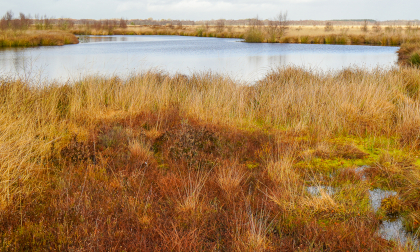
When Thomas Telford and William Jessop set out in the late 1790s to push the Ellesmere Canal (now known as the Llangollen Canal) across Shropshire, they encountered a rather soggy obstacle: Whixall Moss. This was thousands of acres of raised peat bog—essentially a giant, waterlogged sponge made of decaying sphagnum moss.
Navigating a heavy, water-filled clay channel across a landscape that was 90% water and completely lacking solid ground posed a serious engineering conundrum, but they improvised a solution.
The engineering strategy
Build A Floating Trench
Jessop and Telford quickly realised that attempting to dig a conventional channel or build heavy embankments would cause the entire structure to sink out of sight. Their solution was ingenious: instead of fighting the peat, they floated the canal on top of it.
Turf Mattresses:
Workers laid dense mats of brushwood, timber faggots, and thick heather turf directly onto the bog surface to distribute the load evenly.
Clay Puddling:
On top of this flexible mattress, navvies imported tons of heavy clay and worked it with their boots (and occasionally cattle) into a watertight "puddled" lining.
Controlled Weight:
The water level had to be carefully managed during construction; fill it too fast, and the localised weight would slice straight through the bog surface like a wire through cheese.
The 'Sinkage Gang'
Perpetual Motion In Action
Both engineers knew this was not a permanent fix. Peat compresses, rots, and shifts as water table levels fluctuate. The canal was doomed to sink slowly and unevenly from day one.
A dedicated maintenance crew—known locally as the Sinkage Gang—was permanently stationed on the Moss to counter this.
Key tasks of the Sinkage Gang
Height Correction:
As the bed settled, the gang continuously built up the towpaths and puddle lining with fresh clay and turf to maintain the water level relative to the surrounding bog.
Dredging:
The weight of the canal squeezed peat up through the channel floor, requiring constant manual dredging to maintain navigable depth.
Leak Sealing:
Any minor fissure in the clay lining meant water escaping into the peat, which eroded the underlying structure and accelerated sinking. The gang patrolled daily looking for localised 'whirlpools.' (CRT please note.)
Summary
For generations, these maintenance crews waged a quiet, routine war against gravity and geology. While Telford gained fame for dramatic feats like the Pontcysyllte Aqueduct, it was the relentless effort of the local navvies on Whixall Moss that kept the water flowing under the boats.
Today, leisure craft glide smoothly across the Moss, blissfully unaware that beneath their hulls lies a 200 years old engineering compromise floating on a prehistoric swamp.
Ralph Freeman BSc(Hons)